October 2, 2026
REMINDER: CHINA’S EFFORT TO SEIZE PART OF INDIA WAS REPULSED BY A SMALLER NUMBER OF INDIAN TROOPS: Why China Will Not Invade Taiwan. Behind China’s vast military lies an untested army, a purged high command and a leadership at war with itself.
NOR DO THEY CARE – IT’S A HEINOUS CHARGE, LIKE RACISM, THAT DEMS LIKE TO LEVEL INDISCRIMINATELY: Troy Jackson’s Apology to Jewish Voters Shows Dems Don’t Know What Genocide Is.
A FUNCTIONING PRESS WOULD HELP ADDRESS THIS BUT THEY APPARENTLY DON’T TEACH JOURNALISM IN J-SCHOOLS THESE DAYS: ‘It’s all F**King Kabuki Theater’: George Santos Went Haywire Talking About His Time in Congress.
THEY DON’T HAVE AMERICAN FEDERAL JUDGES: Higher Residency Fees for Foreign Nationals in Japan in Effect.
EH. IT’S FRANCE. TOUJOURS LA FRANCE: Hundreds Arrested as Students Riot Across France, Setting Schools on Fire.
VIRGINIA CONTINUES VIOLATING BASIC CIVIL RIGHTS: Virginia AG is Making the Process the Punishment in the Old Dominion’s War on Guns.
I HAVE A THEORY THAT THE LATEST KERFUFFLE AND THE BLOW UP OF THE CLANCY CASE ARE BOTH ATTEMPTS BY THE LEFT TO COURT FEMALE LIV: A piece on the ‘Rape On Campus’ myth.
It makes me suspect that the left is not nearly as sure of victory as they pretend to be.
LARRY CORREIA’S VIEW ON THIS: Trump’s student loan policy change.
THEY WOULDN’T BE TRYING TO STOP IT, IF IT WEREN’T EFFECTIVE: Trump’s $100,000 fee for new H-1B worker visas blocked by second judge.
AS I SAID, MIRACLES HAPPENED: FlyDubai Incident.
I’M PUZZLED AS TO WHY WE CAN’T ENFORCE THE LAW ENOUGH TO KEEP PEOPLE MOSTLY SAFE: Secure in their Persons.
October 1, 2026
OPEN THREAD: You know what to do.
PEOPLE KEEP SAYING ELON CAN’T DO THINGS, BUT THEIR TRACK RECORD IS POOR: AT&T CEO says Elon Musk’s SpaceX phone strategy not “viable.”
PEOPLE I KNOW IN THE BOOZE INDUSTRY ARE WORRIED ABOUT THIS: Ozempic-Like Drugs Could Have a Surprising Effect on Alcohol Cravings.
LIGHTNING DEAL: SimplyVital Face Moisturizer Retinol Collagen Hyaluronic Acid Cream 1.7 oz. #CommissionEarned
NEWS YOU CAN USE: Taking Vitamin C? This Is the Most Important Thing to Remember.
NO OTHER WAY OUT AT THIS POINT:
There will be war. My son is a firefighter. If that were happening to him, and the crowd sat around and watched, I would be their mortal enemy. https://t.co/MvB4tWJFiS
— Rod Dreher (@roddreher) October 1, 2026
And the screencap:
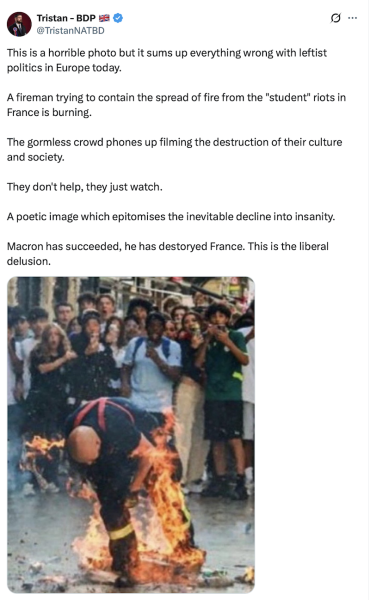
It’s already war.
HOW OBSESSED CAN THEY BE? How Ford’s ‘Obsession With Details’ Aims to Fix Years of Reliability Struggles.
DISPATCHES FROM AL-BRIṬĀNIYĀ: Problem: Labour Is Deeply Unpopular For Importing Unassimilated Muslims. Solution: Import More Unassimilated Muslims.
DISNEY’S DANA WALDEN ON JIMMY KIMMEL’S LATE NIGHT FUTURE: “It’s a Challenging Daypart.”
Speculation about Jimmy Kimmel Live!‘s future has swirled since an early September Page Six story claimed Kimmel’s contract wouldn’t be renewed. ABC quickly denied that was the case, but other reports said the network is looking for significant budget cuts to keep the show going.
“The truth is, it’s a very challenging daypart,” Walden said Thursday at the Bloomberg event. “That’s not to say that Jimmy is not doing a phenomenal job, and his ratings are up. But they’re up relative to a smaller audience that’s watching late night on broadcast television.”
Kimmel and the show also have a big presence on YouTube and social media platforms, but those views and clicks bring in a fraction of the revenue that on-air advertising does. “That is not a lucrative opportunity for a very premium talk show,” said Walden.
As Stephen Krusier asked in May: Now That Colbert Is Gone, Can We Start the Clock on Kimmel? “Kimmel will no doubt use Colbert’s absence as an excuse to become more execrable than ever. ABC can keep him afloat for a while. The network is still a for-profit business, though, and not a weeknightly charity for the Democratic National Committee. ABC execs will almost certainly take a cue from their counterparts at CBS. Kimmel’s petulant attitude won’t do him any favors, either.”
PLEASE, BARACK, WON’T YOU GIVE US THE OPPORTUNITY TO MISS YOU?
Toxic, bitter former President who spent eight years dividing this nation is wondering how the nation got so toxic, divided, and bitter. https://t.co/m90Gl1V9ba
— 𝓐𝓵𝓵𝓮𝓷 𝓡𝓪𝔂 (@2CynicAl65) October 1, 2026
JOHN NOLTE: Tom Cruise’s Global Warming Propaganda Digger About to Lose $100+ Million.
Here’s a movie designed in a Woke Lab to hit the sweet spot of critics…
- Evil white men.
- Evil businessmen.
- Oil bad.
- Global Warming/Climate Change is real (it’s not).
- All of this delivered by Hollywood’s biggest movie star.
…and what’s the result? A rotten 52 percent rating at Rotten Tomatoes. And as I have said a thousand times, if left-wing critics pan a left-wing movie, that movie must suck like nothing has ever sucked in the kingdom of Suckdom, because these critics always-always-always grade on a curve for leftist propaganda.
Hilariously, as if to say Please-please-please David Ellison, buy us out before we destroy ourselves, Warner Bros. dropped $160 to $180 million into this bloated, anti-science lecture, and that does not include promotion costs, which probably lift it into the $250 million range. That puts break-even at right about $500 million worldwide.
And now it’s about to open wide all across America and, per the professional estimates, humiliate itself and its star with an $8 million to $12 million opening. If these projections hold, a movie made for no Normal Person could lose more than $100 million.
Meanwhile, Christian Toto spots more leftist propaganda that’s likely to flop: Jan. 6 Themed Social Reckoning Expected to Bomb at Box Office.
World of Reel shares a pointed reaction to the film and its subject matter:
January 6th eventually comes up, the entire film builds toward it. The film’s arc leads naturally to the suggestion that January 6th was, in part, a product of Facebook itself.
Sorkin has literally said the same thing on the record regarding Facebook and Jan. 6.
The problem?
Who will actually see the movie? Box office projections have “The Social Reckoning” opening to a very soft $6-$10 million on its opening weekend. The competition won’t be stiff.
The only other major new release is “Other Mommy,” a horror film starring Jessica Chastain.
Audiences may not want a lecture on Facebook’s alleged ills. They also won’t rally around a Jan. 6 movie, an issue that likely has exhausted Americans at this point in the culture.
That may explain why “The Social Reckoning” trailers leave out that fateful day.
Nolte used to call this Hollywood’s “liberal sucker punch.” They’re much harder for the industry to successfully pull off in the era of social media.
LIMITED TIME DEAL: Chefman TurboFry Touch Dual Air Fryer. #CommissionEarned