JAPANESE HAVE BEEN DOING IT FOR A LONG TIME: ‘Japanese Walking’ Is Going Viral, and Doctors Say It Actually Works.
August 8, 2026
NEW MATT WALSH DOCUMENTARY ABOUT TO DROP:
In order to make a real change, some dude needs to take the L and actually pretend to be a chick for a year, dominate everything and then admit it was all a ruse afterward. We need somebody with the balls to do it. https://t.co/z24vh1ADog
— Not the Bee (@Not_the_Bee) August 8, 2026
LIFE IN THE 21ST CENTURY: Driving an $18,000 EV That Talks and Can Park Itself.
BE PREPARED: Prepared Hero Emergency Fire Blanket. #CommissionEarned
I SUSPECT THEY WILL:
🚨NEWS: Authorities fear others will copy a group in Seville, Spain who spread pig bones on the construction site a Mosque was set to be built on, making the land impure and stopping the work.
The group received widespread praise on social media for their efforts.
— Basil the Great (@BasilTheGreat) August 8, 2026
PICK UP THE PHONE: How Trump Can End The NFA With One Phone Call.
KEEP YOUR HOUSE CLEAN: roborock Qrevo CurvX Robot Vacuum and Mop. #CommissionEarned
AMERICA’S NEWSPAPER OF RECORD:
Study Finds Possible Connection Between Current Heatwave And Giant Flaming Orb In The Sky https://t.co/VGAZHDeQxF
— The Babylon Bee (@TheBabylonBee) August 8, 2026
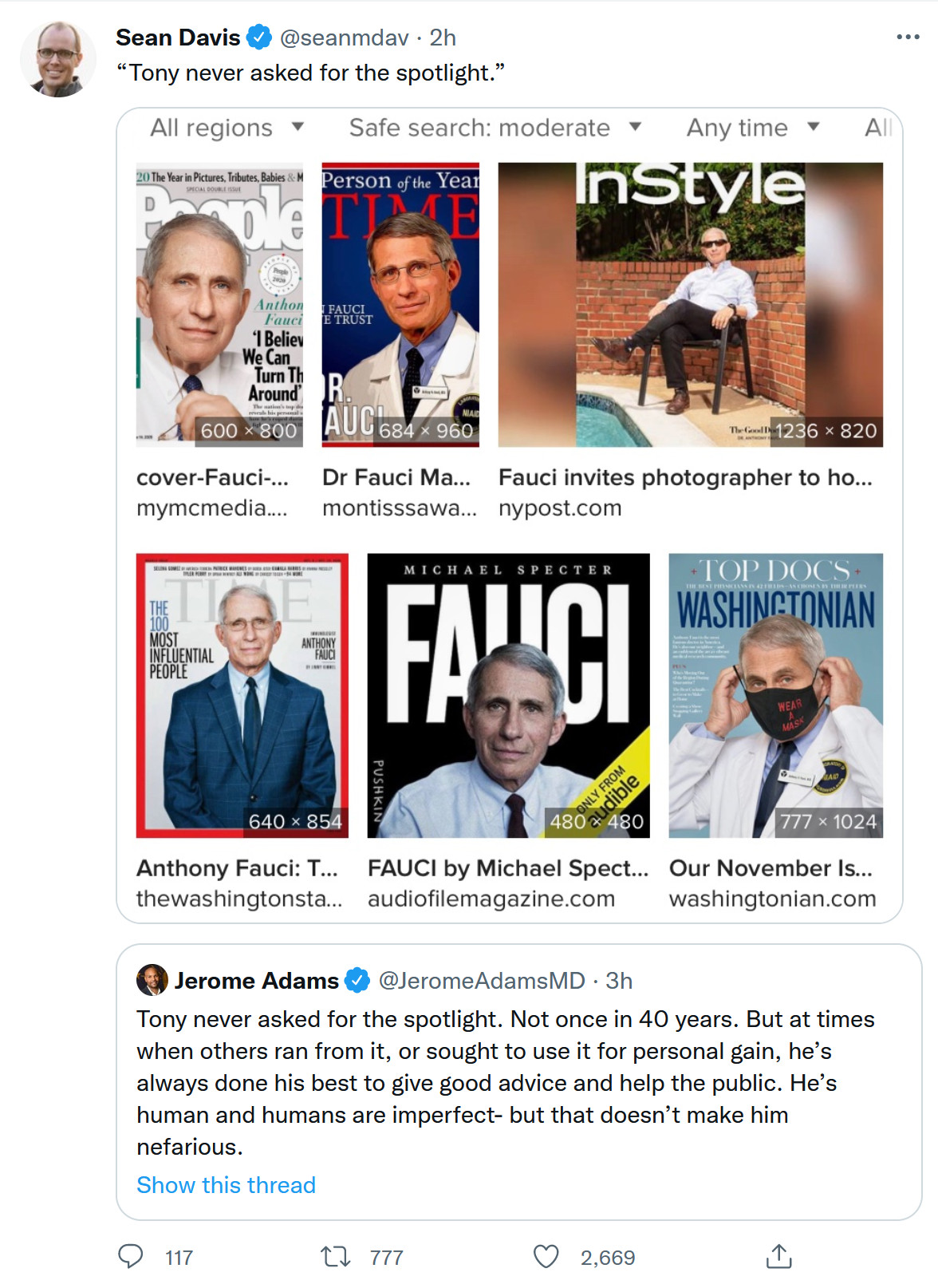
HOW IT STARTED:
How It’s Going:
Proof that God has a brilliant sense of irony, this is what Fauci gets to go home to. pic.twitter.com/AiGGpFsugN
— Eric Matheny (@ericmmatheny) August 8, 2026
THE MEME POST IS UP: Meme, Meme Against the Dying of the Light!
THEY’RE ALWAYS IN THE LAST PLACE YOU LOOK: Antarctica’s giant iceberg break exposed a hidden fish nursery in the Weddell Sea.
DISPATCHES FROM THE EDUCATION APOCALYPSE: Arday’s students think Cambridge failed them. Now they want their grades reviewed.
Cambridge University could be forced to review the grades given to students of Jason Arday after graduates unhappy with their results said they were considering legal action.
A number of Mr Arday’s former students have complained that they received lower grades than expected after “inadequate” supervision by the professor. In one case, a student who asked to change supervisor was accused of being racist.
Separately, Prof Deborah Prentice, the university’s vice-chancellor, is facing demands to refund the tuition fees of students who were taught by Mr Arday after they were “deceived about the nature of their education”.
A mass refund or large-scale retrospective grade changes would be unprecedented in the university’s 800-year history.
Prof Prentice is also facing criticism for failing to grip the crisis engulfing the university, which has damaged its reputation on the international stage. The academics have accused the £507,000-a-year leader of the university of “inaction”, having made no public comments since The Telegraph first reported on the plagiarism row around Mr Arday a fortnight ago. He has now resigned.
It has also emerged that when Cambridge was sent fresh evidence of Mr Arday’s alleged plagiarism last year – having first been alerted to it in 2023 – the “responsible person” allocated to the case was Prof Hilary Cremin, the head of Mr Arday’s faculty who had told him he was “the best in the world” when he was hired.
As a Mister E. Blair wrote of Airstrip One, “It was always the women…who were the most bigoted adherents of the Party, the swallowers of slogans, the amateur spies and nosers-out of unorthodoxy:”
Eve Claxton only concerns herself with the world’s best. pic.twitter.com/2jbCDs8Hru
— GSL1776 (@gsl1776) August 7, 2026
How do you edit a book like that and not realize you’re now co-authoring (or as now seems much more likely, authoring) a title by one of the biggest poseurs in the world?
Related: Icarus in the Faculty Lounge.
I reached out to Arday’s editors—Dawn Davis in the United States, and Kris Doyle, who is publishing the book with Simon & Schuster UK—to ask them why the three-month coma and the shaman woman hadn’t made the cut in the published version of the book, and to find out what they thought of other inconsistencies in Arday’s story and the allegations of misconduct in his academic work. Neither of them chose to answer any questions.
I also tried to reach Eve Claxton, who co-wrote the book with Arday and whom he describes in the acknowledgments as “one of the most important people I have ever met in my life,” by phone and text. She did not respond.
Arday’s book agent, Jennifer Gates, the one who described his life story as “near mythic,” did not respond to multiple emails. A spokesperson for Simon & Schuster would say only that the company “is proceeding with publication” next week.
Exit quote:
There’s a moment near the end of Great and Unfortunate Things when Arday’s confidence begins to waver. He’s filling out his application for the professorship at Cambridge, and just then, as he draws to the brink of destiny, doubts begin to fill his mind. “What if I have completely overestimated my capabilities?” he writes. “What if my story ends up being a cautionary tale like Icarus about flying too close to the sun?”
What if.
Heh, indeed, to coin an Insta-phrase.
UPDATE: Raymond Shaw Jason Arday is the kindest, bravest, warmest, most wonderful human being I’ve ever known in my life:
OK, I need to figure out how to add to a community note.
"Jason Arday is fakking hilarious and has singlehandedly blown up Cambridge University and the entire DEI industrial complex."
How do I do that? https://t.co/HeWzAy1E0U
— Northern Barbarian (@xnoesbueno) August 8, 2026
CRYSTAL:
Being educated is always good
Being a credentialist, know-it-all, douche is bad
Clear enough? https://t.co/z2M8xfrRO1
— Fusilli Spock (@awstar11) August 8, 2026
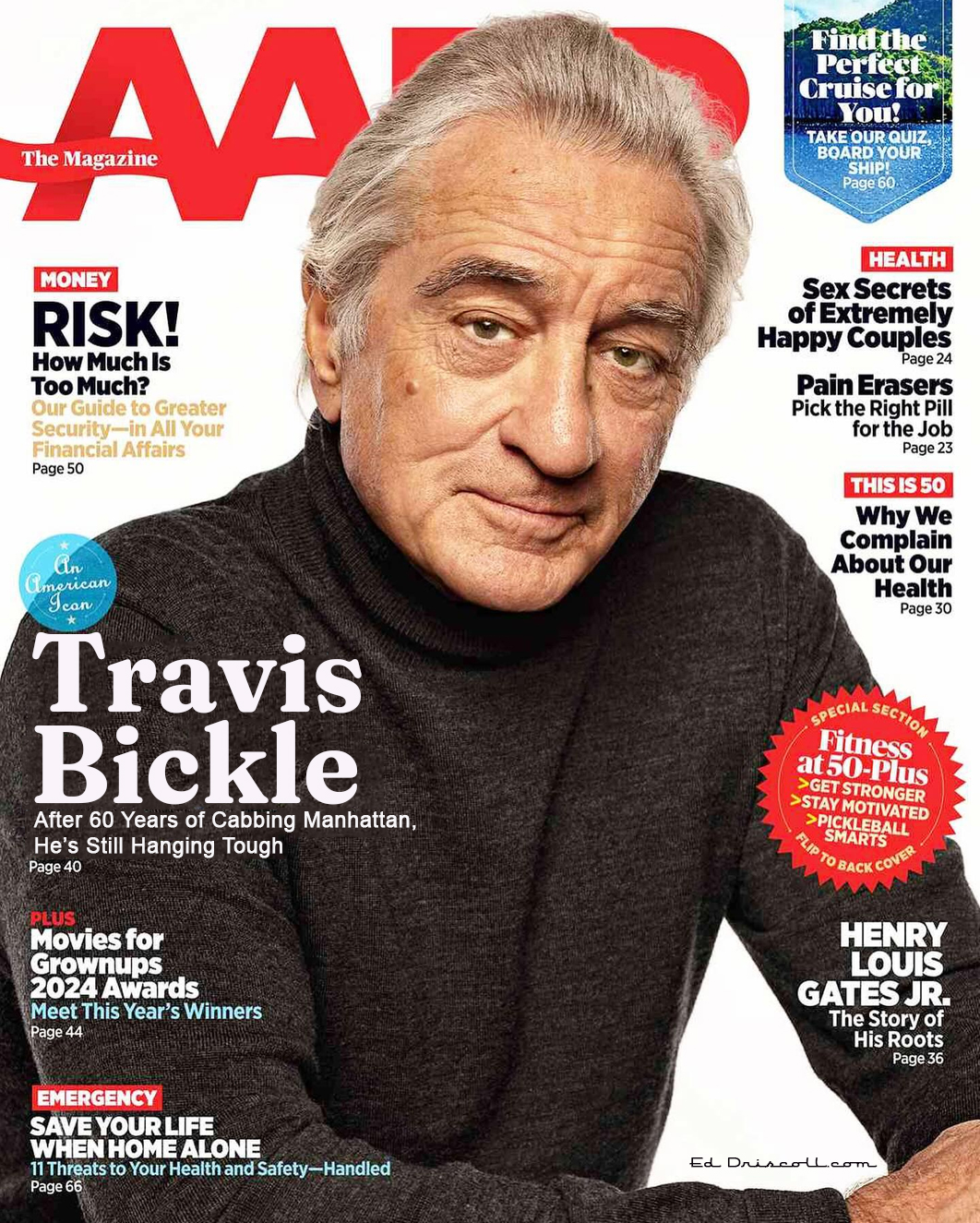
YOU TALKIN’ TO ME? Taxi drivers rarely die of Alzheimer’s — how complex mental maps and spatial reasoning protect your brain.
Taxi and ambulance drivers are less likely than workers in almost any other job to die of Alzheimer’s disease. That was the surprising result of a 2024 study examining the death certificates of nearly 9 million people in the U.S.
These findings stopped me in my tracks because those two jobs rely on the same thing as my own work: maps.
I have spent more than two decades staring at maps. Not paper maps on a wall, but digital ones with multiple layers: flood boundaries draped over census blocks, car crash hot spots plotted against road geometry, and satellite readings of rainfall stitched across river basins. Much of my work as a civil and environmental engineer is done through GIS – that is, geographic information systems. Engineers like me hold several spatial relationships in their minds at once, reasoning about where things sit relative to one another across scales ranging from a city block to a whole watershed.
I always assumed that spatial reasoning across map layers was purely professional. But that study on taxi and ambulance drivers made me wonder whether all that mental work might be doing something good to the brain.
Taxi driver brains
Of the 9 million death certificates from January 2020 to December 2022 that researchers examined, taxi and ambulance drivers had the lowest risk of dying from Alzheimer’s disease out of 443 occupations. After adjusting for age, sex, race, ethnicity and education, roughly 1 in 100 taxi and ambulance drivers died of Alzheimer’s, compared with 1 in 60 people overall.
This pattern did not extend to other driving jobs. The researchers concluded that the key to reducing the risk of Alzheimer’s was not driving itself but continuous real-time navigation: the constant work of locating yourself in space, tracking a destination and updating a mental map as conditions change. Drivers whose jobs relied on fixed or predetermined routes, like bus drivers and aircraft pilots, didn’t seem to experience a similar advantage.
I eagerly await Travis Bickle’s profile in the next issue of AARP Magazine:
NEWS YOU CAN USE: The best boxing gloves: 20+ pairs tested, thousands of punches thrown.
THE CRITICAL DRINKER: She-Hulk — The Show That Literally Killed Careers
Let’s make a superhero as lawyer TV series and have no writers familiar with the latter genre on the staff. What could go wrong?
The head writer and showrunner of “She-Hulk” was Jessica Gao. She was best known for being the credited writer on the “Pickle Rick” episode of “Rick and Morty.”
During the production of that episode, “Rick and Morty” showrunner Dan Harmon cast Susan Sarandon as the family’s… https://t.co/zNn8s73b4u
— Daniel Friedman (@DanFriedman81) August 3, 2026
MEN HAVEN’T MOVED MUCH AT ALL:
The media loves to focus on the political leanings of young men, while completely ignoring the fact that it’s young women who have become far-left radical extremists. https://t.co/nZLNz8oHse
— Geiger Capital (@Geiger_Capital) August 8, 2026
SAME DAY DELIVERY: all free clear Laundry Detergent Pacs for Sensitive Skin. #CommissionEarned
I KINDA LOVE THIS GUY:
The path of life never gets easier. The climb doesn’t get less steep. Your legs just get stronger.
Never quit.
We have communists to wreck.
— Spencer Pratt (@spencerpratt) August 8, 2026
HAHA:
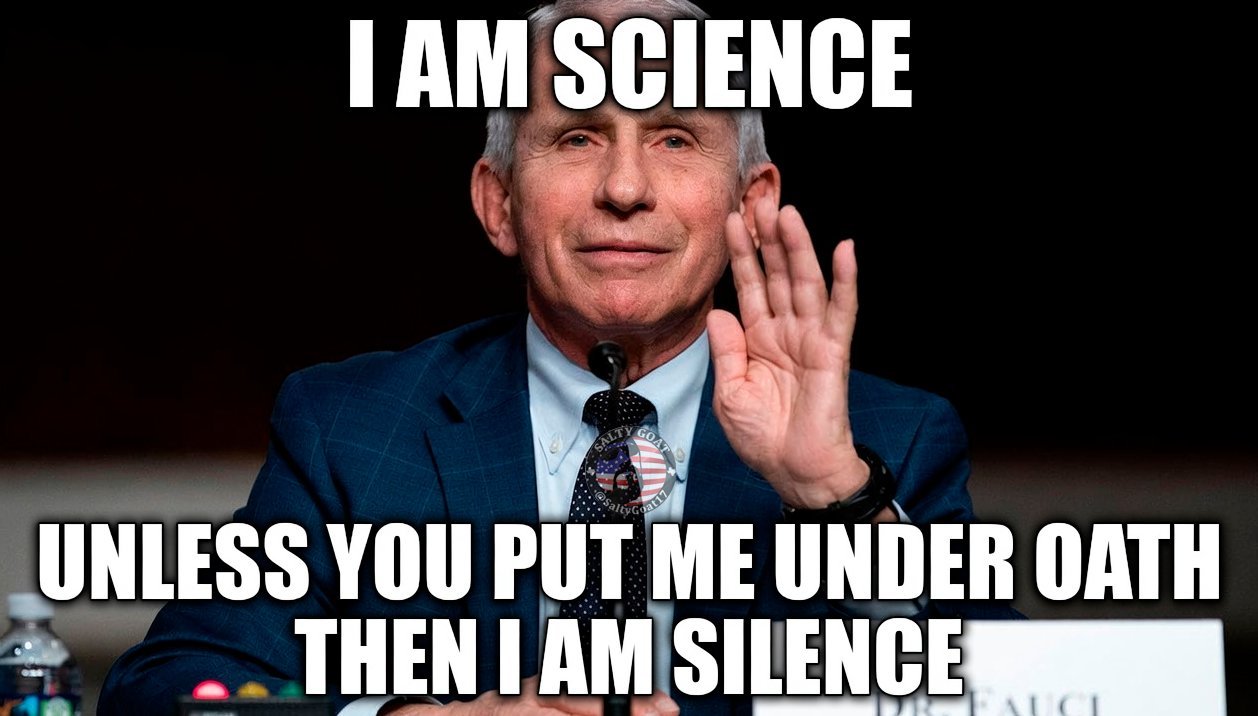
Of course they can immediately see the problem with a fifth column bureaucracy the second the shoe is on the other foot lol https://t.co/15g6oS7jVF
— Inez Stepman ⚪️🔴⚪️ (@InezFeltscher) August 8, 2026
GET YOUR VITAMINS: Ka’Chava Whole Body Meal Shake Chocolate 2 lb. #CommissionEarned
CHANGE:
Holy shit.
Since Trump took office, 1.3 Million foreign-born workers (legal and illegal) have lost a job. Meanwhile, 1.7 Million native-born Americans have gained a job.
A sharp reversal of the last few years. pic.twitter.com/b4b97fPQPS
— Geiger Capital (@Geiger_Capital) August 7, 2026
WAS IT ATTACHED TO A GARAGE DOOR? Still no leads four months after noose found at Stanford labeled ‘terrorism.’
And when did nooses always and everywhere mean “terrorism?” They used to mean bad salsa.