IT’S ALWAYS IN THE LAST PLACE YOU LOOK: Scientists Directly Observe the Hidden Geometry of Electrons.
October 4, 2026
THE STARK WARNINGS ARE USUALLY WRONG:
TRUMP'S TRANS CIVIL RIGHTS TRIUMPH: New data show a predicted Trump-era targeting of trans people failed to materialize, even as LGBTQ leaders warned of an ‘epidemic’ of ‘danger,’ ‘violence,’ ‘murder’ and even ‘terrorism.’ https://t.co/4lZKr7G9oK
— David Mastio (@DavidMastio) October 3, 2026
This isn’t what was expected. When Mr. Trump began his second term by unleashing a barrage of policies that infuriated LGBTQ groups — on the military, identity documents, housing, health care and more — trans advocates thought that the “genocide” they had been warning of for more than a decade would soon arrive. They issued stark warnings. . . .
As the nearly 200 state laws piled up, one of America’s oldest civil rights groups, the American Civil Liberties Union, sounded the alarm. “Anti-transgender laws endanger LGBTQ+ people and their allies. Research also points to … [an] increase in antiLGBTQ+ violence as a result of these laws. Trend analysis of FBI crime data and social media harassment indicate an uptick in violence against LGBTQ+ people following anti-transgender legislation,” the group’s researchers warned.
That wave of violence didn’t happen, either, an absence attributed by an ACLU spokeswoman, Gillian Bransetter, to an overall pattern of declining crime across the country. “If violence is down for everyone else (and it is) it only makes sense that it is down for trans people, too, and that doesn’t change or contradict the impact of anti-trans laws on our risk for violence or our overall higher risk for violence when compared to our cisgender peers,” Ms. Branstetter told the Sun.
Well, Trump has brought down crime in major urban areas, which benefits everyone, but the alarmism of many “rights” groups in his administration has generally been bogus.
WHY IS THE LEFT SUCH A CESSPIT OF ANTISEMITISM? Zionism is racism, British Green Party says:
Zionism is racism, according to a new policy adopted by the Green Party.
Some 1,022 party members cast their votes in favour of the motion, compared with 813 who voted against it.
The outcome means that Zionism, the right to Jewish self-determination in their ancestral homeland, is now considered racist by Zack Polanski’s party.
Israel attacked the Greens shortly after the result, accusing the party of giving “legitimacy to terrorism”.
The motion calls for the abolition of the state of Israel and the establishment of a “single democratic Palestinian state in all of historic Palestine with Jerusalem as its capital”.
It backs the “right of the Palestinian people to resistance and liberation from Israeli occupation” and recognises the right of “oppressed colonial peoples to defend themselves against foreign oppression”.
Supporters of the motion, which was voted on at the Greens’ party conference on Sunday, have also called for the “removal of Palestine Action from the list of proscribed organisations”.
On Sunday, a spokesman for the party said: “This has been a serious and deeply felt debate within our membership. Our members value the ability to bring forward and decide party policy, and conference has now made its decision.
Flashback:
“It is time,” [Pat] Moynihan wrote in a widely noted article, “that the American spokesman came to be feared in international forums for the truths he might tell,” such as the fact that most of the Third World regimes that tub-thumped for various human rights resolutions at the U.N. didn’t show the slightest respect for human rights at home. So weak was American prestige at the U.N. at that time that the United States couldn’t even get South Korea’s application for membership in the U.N. General Assembly considered. A New York Times headline captured the mood: MOYNIHAN CALLS ON U.S. TO START RAISING HELL IN U.N. Ford and Kissinger agreed, and Moynihan was appointed U.S. Ambassador to the U.N. in April 1975, the very month Vietnam and Cambodia fell.
Hypocrisy is perhaps the last moral failing in the modern world that has not (yet) been transmuted into an alternative lifestyle, and Moynihan relished shining the spotlight on Third World hypocrisy at the U.N. Observing that the median length of time since the government of the average U.N. member nation had been overthrown was just 11 years, Moynihan declared that “We are not here to hear totalitarian dictators lecture us on how to run a democracy.” More: Perhaps U.S. aid to Third World nations that voted against us at the U.N. should be cut. “Let the Tanzanians get their aid from the same capitals from which they got their politics,” Moynihan said. When a U.S. mission officer passed along to Moynihan a query from a delegate from a Third World nation asking, “Are you threatening us?” Moynihan replied: “Tell him yes.” Moynihan’s tenure coincided with the nadir of the U.N., the infamous resolution equating Zionism with racism. If the Third World couldn’t get directly at the United States (though not for lack of trying, such as a resolution condemning U.S. colonialism and repression in Puerto Rico), and couldn’t expel Israel outright, a resolution that amounted to a de facto equation of Zionism and Nazism would do nicely as a humiliation for the West. It passed by a wide margin, after which followed “a long mocking applause” by the Third World nations that had engineered the vote. Moynihan walked over to the Israeli U.N. Ambassador and said, “Fuck ’em.”
—Steve Hayward, in his 2001 book, The Age of Reagan: The Fall of the Old Liberal Order: 1964-1980.
BUCKLE UP:
This seems like the start to a survival horror game. https://t.co/vOhLaFMSF5
— 7% NaCl (Salty) (@TwoRulesOfWar) October 4, 2026
US PULLS BOMBER JETS FROM RAF FAIRFORD AFTER TERROR PLOT:
The US has withdrawn all of its bomber jets from RAF Fairford after the base was the target of a suspected terror plot last weekend.
The Pentagon said all B-1 bombers deployed to the base, which US forces have used to strike Iran, have returned to the US.
Counter-terror police are investigating whether Iran was behind the plot. Five British nationals and a UK-Iranian national have been arrested on suspicion of suspected terrorism and explosive offences over the incident. All of those who were arrested have since been bailed.
A Pentagon official told The Telegraph: “While operational security precluded us from confirming the movement of our assets and forces in real-time, we can acknowledge now that all US bombers that were deployed to RAF Fairford have re-deployed to their home stations in the United States.”
US officials told the Wall Street Journal the decision was in response to security concerns over suspected terror plots against the facility.
Or to put it another way, “We are post ‘Special Relationship.’”
If this is true. We are seeing a massive USAF vote of no-confidence in the UK Labour government.
If the "Special Relationship" between the US & UK depends on which political parties are in power simultaniously.
We are post "Special Relationship." https://t.co/YuwJI7hVyE
— Trent Telenko (@TrentTelenko) October 4, 2026
R.I.P. SPECIAL RELATIONSHIP:
The Pentagon confirms that all B-1 bombers deployed to RAF Fairford in the UK have returned to the US:
"Due to operational security considerations, we could not confirm the aircraft's movement in real time; however, we can now confirm that all US bombers deployed to RAF Fairford… pic.twitter.com/vwI4PwNJLW
— Eli Afriat 🇮🇱 (@EliAfriatISR) October 4, 2026
As Britain — and most of the rest of Europe — look to become Islamist/Communist nations, the US will be reconfiguring, as it should. I assume we’re planning a way to take control of or eliminate their nuclear arsenals, too, if it comes to that.
COLOR ME UNSURPRISED: The Obstacles of Low Range and High Price: 2026 Jeep Recon EV Tested.
PRETTY GUTSY STUFF:
Mike Myers wore a “FIGHT FASCISM” shirt to hear AOC and Bernie introduce a band in Queens.
The fascists never stood a chance, that shirt definitely is making a change….🙄 pic.twitter.com/v5boZEB71H
— Clerpatriot (@clerpatriot) October 4, 2026
Flashbacks:
● Bernie’s Strange Brew of Nationalism and Socialism.
—Kevin D. Williamson, NRO, July 20th, 2015.
And:
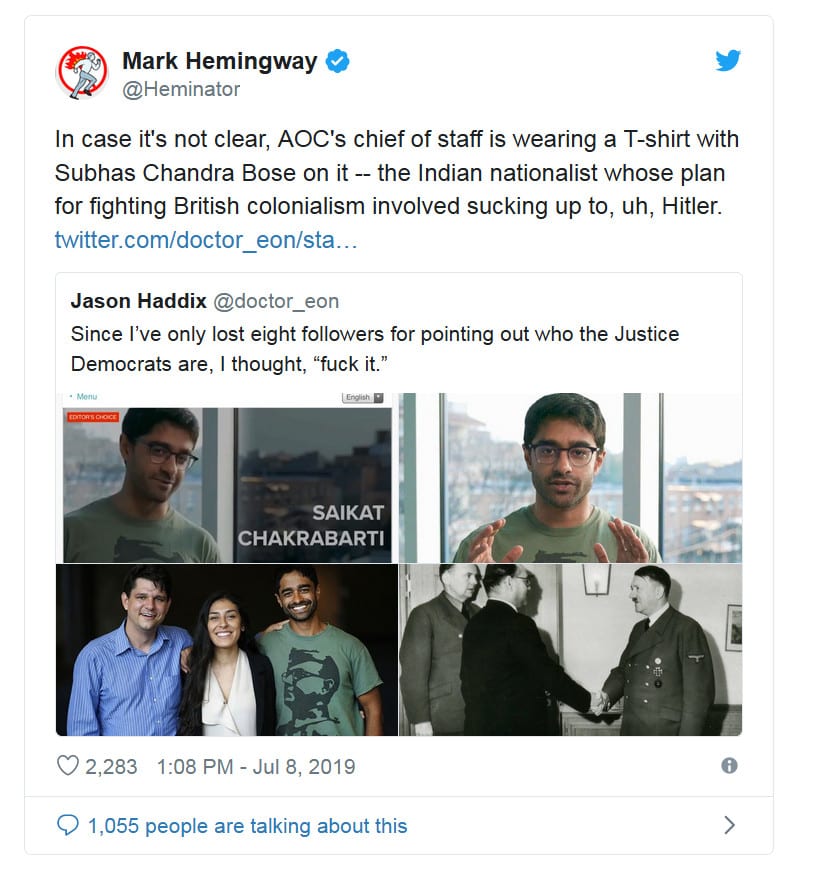
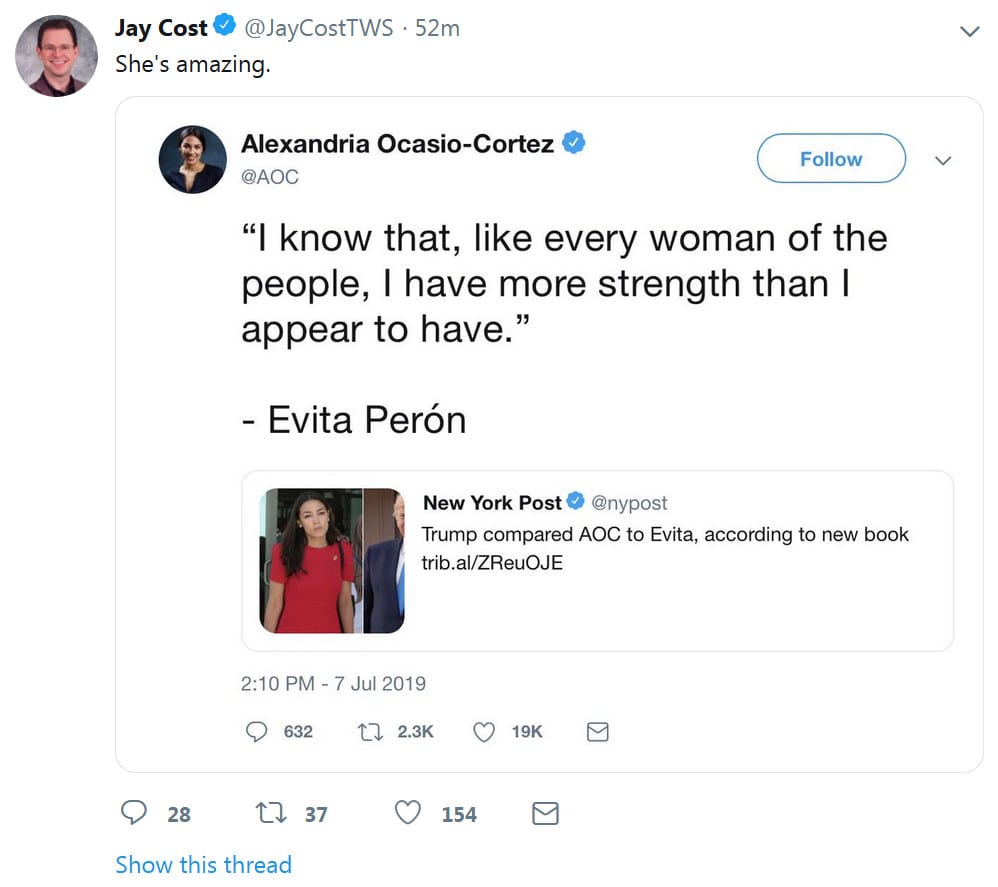
As one wag joked on Twitter at the time, “Look just because she’s favorably comparing herself to the lady that Franco liked a lot who sheltered Mengele doesn’t mean… OK, I forgot where I was doing with this.”
The following year AOC herself was wearing a T-shirt with the fascist Black Panthers’ logo on it. I’m really proud of Myers for calling out such political excesses right on their home turf…
UPDATE: Was it over when the Haitians bombed Pearl Harbor?
Free Haiti?
Lol like…..from who, dawg? Haitians? Free Haiti from f**king Haitians? https://t.co/hGcw9qSJEt
— Oilfield Rando (@Oilfield_Rando) October 4, 2026
LIMITED TIME DEAL: ANCEL AD310 Classic Enhanced Universal OBD II Scanner. #CommissionEarned
CONFUSION TO THE ENEMY: The Start to a Great Weekend: Waking Up to Find that Everytown and ATF Have Been Sh!tposting At Each Other.
Related:
As much as the black pilled doomers loved to cry about how the Trump admin hasn’t fixed every problem in America… I’d like to point our this is the current ATF director telling some Everytown For Gun Safety dude to fuck off.
Keep in mind two years ago Biden’s ATF director was… https://t.co/HiXx6gXLcw
— Larry Correia (@monsterhunter45) October 3, 2026
25 YEARS AT FIRE, AND SOMEHOW THERE’S STILL WORK TO DO. I’ve now spent a quarter-century defending free speech, arguing with censors, and watching the same bad ideas about censorship find new packaging. More in this week’s update!
LIMITED TIME DEAL: Lucky Brand Men’s Venice Burnout V Neck Tee. #CommissionEarned
HMM: The Aging Brain Isn’t Declining – It’s Adapting, Study Finds. “There might be an evolutionary purpose to all this: For those of us lucky enough to make it to old age, the priority becomes passing on information, rather than trying to remember the specifics of day-to-day life.”
I’ve often thought that the reason why old people repeat old stories and lose their distant memory last is because as tribal memory stores, they need to download their storage before they die.
NEWS YOU CAN USE: How often should you actually replace your sneakers?. More often than you think.
TRUTH:
When Jake Tapper asked Scott Jennings if “holding your nose” and voting for Ken Paxton is a winning strategy, Jennings dropped an important big-picture message.
The phrase he used was “not wanting to put his face in a wood chipper.”
That line says it all.
For context, this… pic.twitter.com/I9mexvq5LG
— Overton (@overton_news) October 4, 2026
FINGERS CROSSED. ALL THE FINGERS: Minnesota Can Go Red This Year. Here’s Why.
DISPATCHES FROM THE EDUCATION APOCALYPSE: The ‘Cornell 7’ haven’t been charged. The mob doesn’t care.
The allegations of a gang rape at a Cornell University frat house in 2024 that are dominating headlines have transported me right back to the preceding decade, where cases of regret too often turned into accusations of rape.
These were the years of the Obama administration, during which colleges and universities were pushed to investigate allegations of sexual misconduct in ways that favored the accusers. The accused – almost always young men – were essentially stripped of their constitutional due process rights, and the accuser’s word was all that mattered. Many male students were kicked off campus, with their reputations in ruins while they often lost judicial protections.
This problematic and unfair framework was fixed during President Donald Trump’s first term, and as of Sept. 28, those guidelines have been officially reinstated.
There is a rush to judgment in the Cornell rape allegations
The heated reaction to the Cornell allegations and the rush to judge the young men involved before they’ve had their day in court makes me fear the country has learned nothing about the dangers of simply “believing women.”
Read the whole thing.
Related:
The black kid is also the one who wrote the lewd messages on the group chat encouraging other boys to go see. Seriously, what is Letitia going to do? Is BLM going to intervene?
— Peachy Keenan (@KeenanPeachy) October 4, 2026
UPDATE:
Part of me just wants to point and laugh at the blue on blue circular firing squad…. The local DA is a Democrat, Cornell is a far-left college. Hochul threw both under the bus. Then there this dilemma for the left… pic.twitter.com/vaZGWHluhq
— John Ocasio-Rodham Nolte (@NolteNC) October 4, 2026
I LOVE BENT-OVER ROWS: Skip the Shrugs: This Old-School Row Hammers Your Mid-Back Instead. But, you know, they’re different exercises and do different things.
JOSEPH CAMPBELL: The Election of 1936: When ‘Democracy’ Was on the Ballot.
The text of Hearst’s speech was reprinted on election eve in his flagship newspaper, the New York American. Displayed on the American’s front page that day was an editorial that considered the specter of socialism sweeping America, should Roosevelt win reelection. The editorial made generous use of capital letters in proclaiming “voters will decide whether their country is to remain a CONSTITUTIONAL DEMOCRACY or become a SOCIALISTIC nation. Governor Landon is PLEDGED to continue the constitutional democracy founded by Washington, Jefferson and Madison.”
Only slightly less florid was the Chicago Tribune, then reliably conservative in its opinions. In a front-page editorial published the day before the election beneath the headline, “Paul Revere must ride again,” the Tribune declared, “If Landon is not elected you may have seen the last of free government as you have known it. … If you love your country and want to preserve it, see that Mr. Roosevelt is defeated.”
An editorial cartoon displayed nearby showed Roosevelt guiding a caricature of Uncle Sam, blindfolded, to the edge of a cliff marked “dictatorship.”
The day before, the Tribune said in an editorial that if reelected, Roosevelt “will do everything in the power of his dominating office to bring the people of America under the will of a President as imperious as any European dictator.”
Roosevelt scoffed at such allegations as “false issues” conjured by political foes, a tactic, he said, “as old as our democracy.”
He declared in a radio speech on election eve: “We believe in democracy because of our traditions. But we believe in it even more because of our experience. Here in the United States we have been a long time at the business of self-government.”
The election wasn’t close. Roosevelt carried 46 states, losing only Maine and Vermont, while rolling up 523 electoral votes to Landon’s eight. The Literary Digest aptly called the result a “superlandslide” for Roosevelt, a savvy liberal politician who had estimated he would win 360 electoral votes. Asked about the discrepancy between his prediction and the outcome, Roosevelt said mischievously that it could be due to “my well-known conservative tendencies.”
In the election’s aftermath, Hearst was conciliatory, if unctuously so. In a signed commentary on the front page of the American, Hearst averred that the “country is still a democracy.” Gone were references to Roosevelt as would-be dictator.
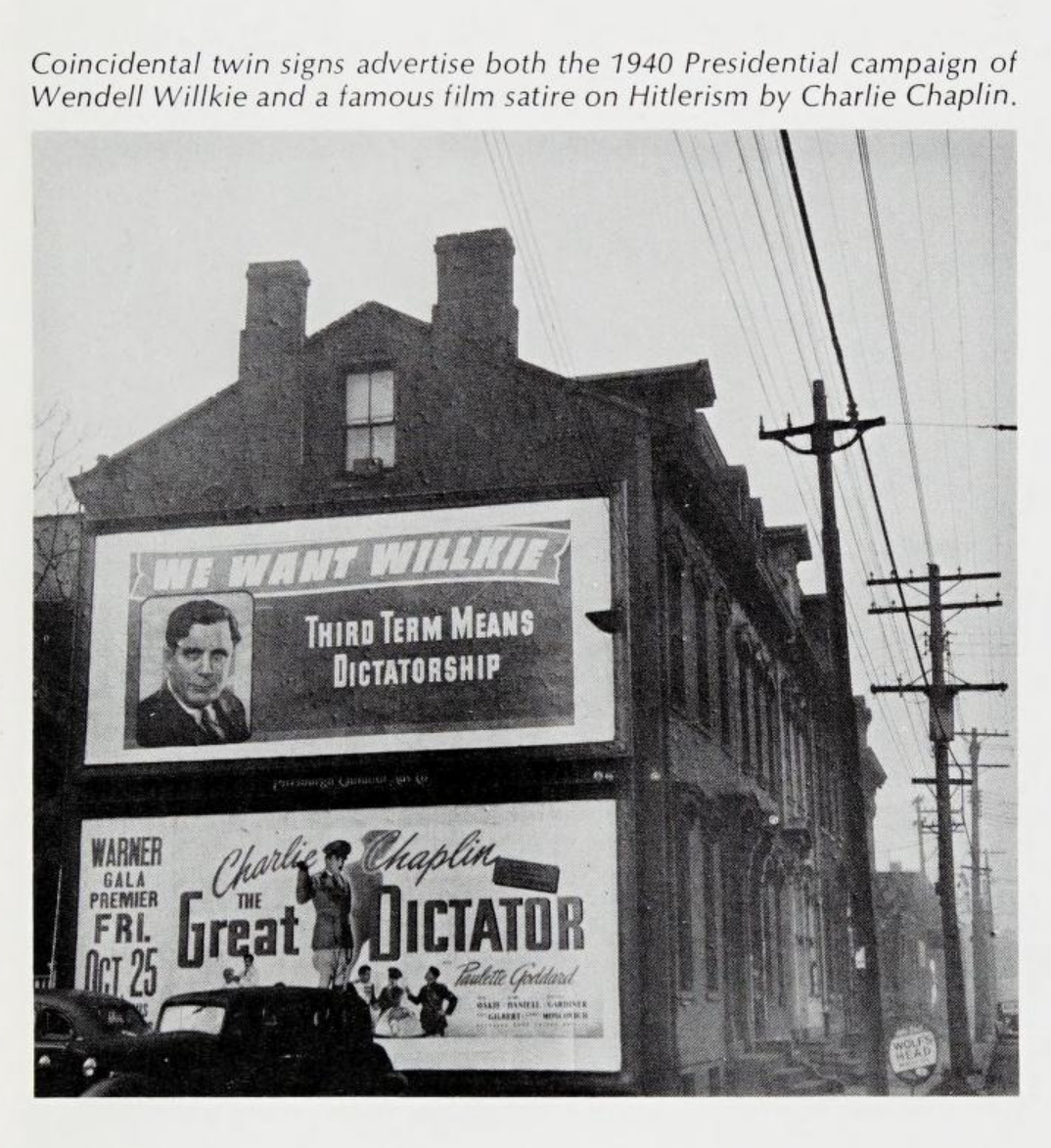
Similar fears would return four years later, ultimately leading to the passage of the 22nd Amendment:
PUBLIC SCHOOLS DON’T GET A VETO OVER ANTI-BIDEN SLOGANS. Two Michigan students were threatened with punishment for wearing the anti-Biden slogan to school, and FIRE is asking the Supreme Court to make clear that schools can’t magically turn protected political speech into punishable profanity because they know what the euphemism means. See this week’s update!
METAPHOR ALERT:
The Omani pilot asked the Indian pilot if he could leave his seat to pray and after being granted permission, he attacked the Captain with the axe from behind.
This is actually a great metaphor for the west.
— GimpelTheMaccabee🎗️ (@MaccabiGimpel) October 3, 2026
RUSSIA’S STOLEN CHILDREN ARE BEING TAUGHT TO KILL — USING HAMAS’S PLAYBOOK:
ABC News Australia’s new documentary, Ukraine’s Stolen Children, released this week, brought me to an image I couldn’t shake: a young child holding a rifle, smiling proudly. The image was jarring for another reason. I had seen it before.
Not in Ukraine. In Gaza.
The countries are different, the wars are different, and the actors are certainly different. Russia is a state. Hamas is a terrorist organization. Their histories, ideologies, and objectives are not interchangeable. What was impossible to ignore, however, was the similarity in what children were being taught and the methods being used to teach them.
The documentary examines Russia’s removal of Ukrainian children, including children taken from orphanages, care facilities, and camps. More than 20,000 have been identified by Ukrainian authorities as deported or forcibly displaced, although the true number may be considerably higher. Yet it was what happens to some of these children afterward that caught my attention.
The countries are different, the wars are different, and the actors are certainly different. Russia is a state. Hamas is a terrorist organization. Their histories, ideologies, and objectives are not interchangeable. What was impossible to ignore, however, was the similarity in what children were being taught and the methods being used to teach them.
The documentary examines Russia’s removal of Ukrainian children, including children taken from orphanages, care facilities, and camps. More than 20,000 have been identified by Ukrainian authorities as deported or forcibly displaced, although the true number may be considerably higher. Yet it was what happens to some of these children afterward that caught my attention.
Related:
Now it can be told. The NYT can reveal how Russia is using migrants "who come from countries as varied as Eritrea, Afghanistan, Iran, Somalia and Cuba" as "part of Russia’s larger strategy for sowing discord in the West".https://t.co/us8qG4uyi6
— wretchardthecat (@wretchardthecat) October 4, 2026
GET RID OF ALLERGY EYES: PATADAY Once Daily Extra-Strength Relief Allergy Eye Drops, 2.5 ml, 2 Pack. #CommissionEarned
HIGHER EDUCATION BUBBLE UPDATE: Record-low three in ten Americans consider college ‘very important’: poll.