AMERICA’S NEWSPAPER OF RECORD:
Apocalypse Draws Near As Last Remaining Universally Beloved Human Being Passes Away https://t.co/FNeIqbDq6p
— The Babylon Bee (@TheBabylonBee) August 25, 2026

AMERICA’S NEWSPAPER OF RECORD:
Apocalypse Draws Near As Last Remaining Universally Beloved Human Being Passes Away https://t.co/FNeIqbDq6p
— The Babylon Bee (@TheBabylonBee) August 25, 2026
WHEN SECONDS COUNT, THE POLICE ARE ONLY MINUTES AWAY: Homeowner’s Gun Works When Restraining Order Doesn’t. “Police later confirmed the obvious: the dead man had an active protective order barring him from the very address he’d chosen to invade. Paper and ink meant nothing to a genius who thought ‘restraining order’ was just a polite suggestion. Then again, a restraining order doesn’t enforce itself. Armed self-defense proved harder to ignore.”
NIFTY: Data centers become ‘killer application’ for new power transformer tech.
Several US companies, including Amperesand, Heron Power, and DG Matrix, have collectively raised more than $280 million in funding over the past year to commercialize solid-state transformer technology.
Solid-state transformers could also greatly reduce the amount of copper and other materials needed by data center projects, while their smaller physical footprints allow data center developers to do other things with the available space, Lukic explained.
In the long run, successful commercialization of solid-state transformers could even help ease the broader supply chain shortage affecting power transformers. That would make transformers more readily available for power grid upgrades and expansions beyond data center projects.
“There are relatively few specialized companies that manufacture [conventional] transformers, while solid-state transformers are like an electronics device,” Lukic said. “It completely opens up the space for who can play in the transformer space, and also opens up where transformers can be manufactured.”
Faster, please.
MORE DETAILS AND REACTIONS: Dolly Parton Passes Away at 80.
FREE ALBERTA!
This gives the game away.
To Carney, building a pipeline to export Alberta oil is a burden, something he needs to be convinced to do by America. They have to give him something to do it.
Alberta's interests don't matter. Alberta is simply a bargaining chip. https://t.co/vfPK6WVmof
— Ezra Levant 🍁🚛 (@ezralevant) August 25, 2026
But — oh, Canada — there’s always more:
"We will never surrender sovereignty over this unceded land we're illegally occupying." https://t.co/rAQtUa9xHF
— Tristin Hopper (@TristinHopper) August 25, 2026
LIES, DAMN LIES AND $40 TRILLION NATIONAL DEBT: Issues&Insights nails the Mainstream Media’s attempts to blame Trump and tax cuts for the $40 Trillion national debt (that is actually $176 Trillion).
OBAMA SAID HE’D MAKE COLLEGE MORE AFFORDABLE AND YOU CAN GUESS THE REST:
The US govt is the biggest predatory lender in the world, transferring wealth from young people to college administrators. https://t.co/Z9GcsAaezJ
— Carol Roth (@caroljsroth) August 25, 2026
STAY SAFE: aosu D1 Max, 4K 8MP Solar Security Camera Wireless Outdoor. #CommissionEarned
SMALL-TOWN CRIME: Ungodly Doings In Godley. “In a small city of some 5,000, you would expect there to be some overlap between the city council and other institutions in town, like the volunteer fire department, the PTA, or the Kiwanis Club. One thing you wouldn’t expect city council overlap with: a prostitution ring.”
RIP: Dolly Parton dead at 80.
THAT SEEMS RIGHT:
This many far-left activists going after the Paramount / Warner Bros. merger signals absolute fear that conservatives will get a foothold in Hollywood. https://t.co/SjBSIlcbFM
— Red Pilled America (@RedPilled_USA) August 25, 2026
Related thoughts from George MF Washington:
Yes, the only thing keeping them here is nostalgia for a world long gone and social pressure. The truth is that getting out and around normal Americans and away from LA which is a clinically insane city would do wonders for the product being pushed out the door https://t.co/DFZe8iKxL4
— George MF Washington (@GMFWashington) August 24, 2026
IT’S OBVIOUSLY GLOBAL WARMING: Why are there suddenly so many devastating earthquakes?
ED MORRISSEY: Today’s Deep Question: Why Is El-Sayed So Curious About Watters’ Genitalia?
Get ready for 83 seconds of pure … ick.
Actually, today’s truly deep question is what Abdul El-Sayed thought would happen when he agreed to appear on Jesse Watters’ show in the first place. The decision to do an interview on Fox News makes some sense when fighting to win a statewide election in a state Donald Trump won two years ago. Sean Hannity would probably have been the choice there, who routinely offers grace to political opponents, or maybe Bret Baier, although his calm and cool demolition of Kamala Harris deserves legendary status. The Five might have been El-Sayed’s best format.
Instead, El-Sayed chose to tangle with Watters and his naturally combative-yet-amusing style. It didn’t take long for Watters to demolish El-Sayed on the question of sex-change surgeries for minors, a question that El-Sayed thought he’d prepared for by asking about … Watters’ penis.
This will become legendary for all the best reasons:
🚨 WTF?! Abdul El- Sayed says CIRCUMCISION is the same thing as SEX CHANGES FOR MINORS
JESSE: "So you think it's okay for a parent to SLASH his kids dingaling off?! You think that's okay?!"
ABDUL: "Are you circumcised, Jesse?"
JESSE: "Uhh yeah, that's a PERSONAL QUESTION,… pic.twitter.com/Znb3ix0ToD
— Nick Sortor (@nicksortor) August 25, 2026
Noah Rothman adds, “El-Sayed’s Circumcision Quip Was Too Clever by Half:”
Surely, El-Sayed’s revealed confusion over the practice of circumcision and how it is distinct from genital mutilation will do nothing to dispel the allegations of antisemitism swirling around his campaign. More damaging to him, perhaps, is the candidate’s flat-footedness on the controversial issue of youth gender transition therapies and the harm they do.
The minimally curious should by now have grappled with the medical literature that finds young people suffering from gender dysphoria do not, on balance, experience positive mental health outcomes as a result of surgical or pharmaceutical interventions. Indeed, their conditions often worsen. El-Sayed and others should be expected to have surveyed the landscape in Europe, where the public health apparatus expresses increasing uncertainty about the value of those interventions.
They should recognize, at the very least, the political peril associated with their incuriosity, especially if they’re running for office. It’s not too much to expect candidates to familiarize themselves with the public’s anxieties toward biological males playing in women’s sports or the increasing episodes of violence attributed to gender dysphoric personalities.
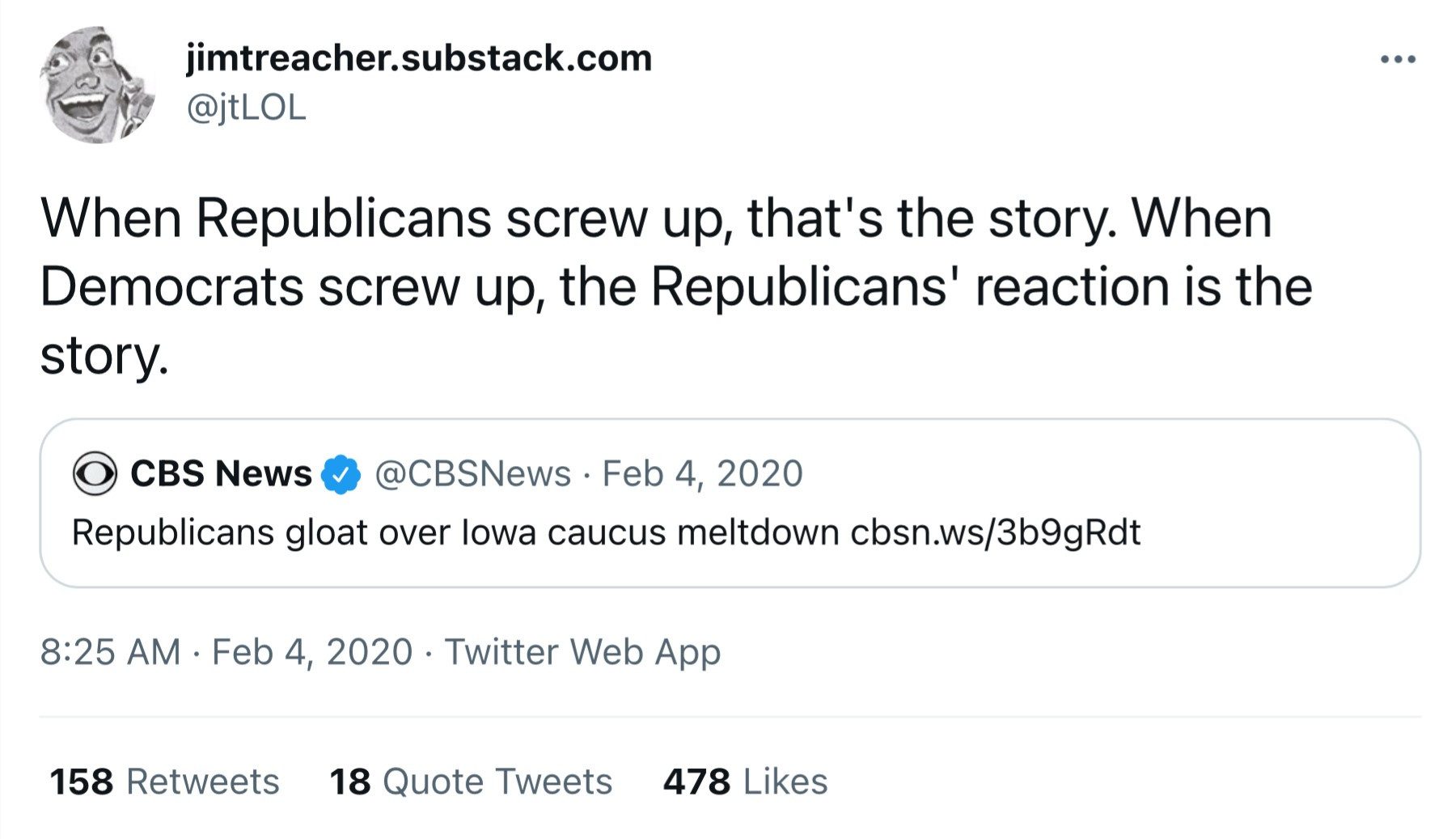
Noah adds, “You know that a Democrat has done or said something indefensibly asinine when the political press covers the reaction to it with more vigor than the precipitating event.”
But that’s an everyday occurrence in the DNC-MSM:
MEANWHILE, OVER AT VODKAPUNDIT: Yeah, About That ‘Famine’ in Gaza…
Most of the coverage, such as it was, was the result of an IPC report from July of last year including this dire warning:
Through June 2026, at least 132,000 children under five are expected to suffer from acute malnutrition—double the IPC estimates from May 2025. This includes over 41,000 severe cases of children at heightened risk of death. Nearly 55,500 malnourished pregnant and breastfeeding women will require urgent nutrition response.
Well, now it’s August. So let me be crude and ask, “Where all the dead kiddos at?”
Full details at the link.
OH NO:
A message from the family of Dolly Parton. pic.twitter.com/9DNRgRx0uH
— Dolly Parton (@DollyParton) August 25, 2026
THE NEW SPACE RACE: ‘You’ll see lights on the moon’: Billionaire space executive predicts moon commutes in the 2030s. “Voyager Technologies founder and CEO Dylan Taylor says off-world jobs could emerge much sooner than many people expect. Taylor told Fortune that spaceflight is nearing a new stage, shifting away from brief missions and toward a reality wherein living and working off Earth is routine. In his view, the next milestone is a lunar outpost, which he expects could arrive in the early 2030s.”
OPERATIVES WITH BYLINES: Who’s Paying for Climate Reporting in the Mainstream Media?
Over the years, the lack of trust in journalism led to fewer subscribers, resulting in fewer newspapers and, naturally, fewer outlets subscribing to the Associated Press news service.
To fend off complete obliteration, the AP adopted a model that includes accepting “support” to help fund its reporting. For instance, a recent story on an appeals court ruling against the Trump administration regarding Biden-era clean energy projects included this note: “The Associated Press receives support from the Walton Family Foundation for coverage of water and environmental policy.”
The Walton Family Foundation is an organization devoted, in part, to environmental causes. Its political position is clear – back in 2022, it applauded passage of President Biden’s so-called Inflation Reduction Act, a giveaway of billions to the climate crusade.
“The challenges of climate change have and will continue to impact every aspect of our lives,” the Walton Foundation declared at the time. “Government, business, tribal nations, philanthropy, advocates, and others will all need to build on this historic investment together to continue to build momentum for a more resilient future.”
The AP insists, of course, that it is editorially independent and “solely responsible for all content” of its climate stories. But consider this – the Walton Foundation’s original two-year $785,000 grant in 2021 funded three AP reporters (and, presumably, related expenses), according to the foundation. Just two years later, the grant had grown to a three-year commitment totaling $2.5 million.
From there, things get worse.
IT ALSO HELPS IF YOU DON’T KILL THE KIDS THAT YOU HAVE:
LIBERAL BABY BUST: Leftists aren’t having kids over mental health, stress while conservatives keep forming families: IFS studyhttps://t.co/PzsCjCiwPI
— Jack Posobiec (@JackPosobiec) August 24, 2026
ONCE AGAIN, REALITY GETS OUT IN FRONT OF THE BEE:
Lol, lmao even pic.twitter.com/Id7fFQI8QX
— Reddit Lies (@reddit_lies) August 24, 2026
ERIK FLORACK: The Tale of the Red Robes. “Seems to me an indication of a lack of things to protest on the left, or at least a lack of things they can protest without getting themselves into trouble, either by running afoul of their own set of values, or running into the angry and violent. And even in this case, it’s a bit of a stretch to ignore Islam in this.”
KEEP YOUR DISHWASHER CLEAN: Affresh Dishwasher Cleaner. #CommisisonEarned
ANSWERING THE IMPORTANT QUESTIONS: Do You Actually Need to Avoid NSAIDs if You Have Ulcerative Colitis?
PERSPECTIVE:
In my last two posts, I emphasized the enormous gains in material wealth and life expectancy that humanity has experienced over the past couple of centuries.
But those improvements are nothing compared with the monumental gains in what I call moral autonomy and… pic.twitter.com/i0d2nsQo6B
— Jesús Fernández-Villaverde (@JesusFerna7026) August 25, 2026
Meanwhile, some “conservatives” sing the praises of feudalism.
THE NEW SPACE RACE: Semianalysis Shows SpaceX Has Everything for10 GW 2027 AI Data Center Build.
All the people opposing earthbound data centers are just doing marketing for Elon. I’m cool with that, though I’m not sure all of them are.
InstaPundit is a participant in the Amazon Services LLC Associates Program, an affiliate advertising program designed to provide a means for sites to earn advertising fees by advertising and linking to Amazon.com.